If you’ve ever received “WTW?” in a message and paused for a second, you’re not alone. Digital slang changes fast, and abbreviations like WTW are now common across texting, social media, and dating apps.
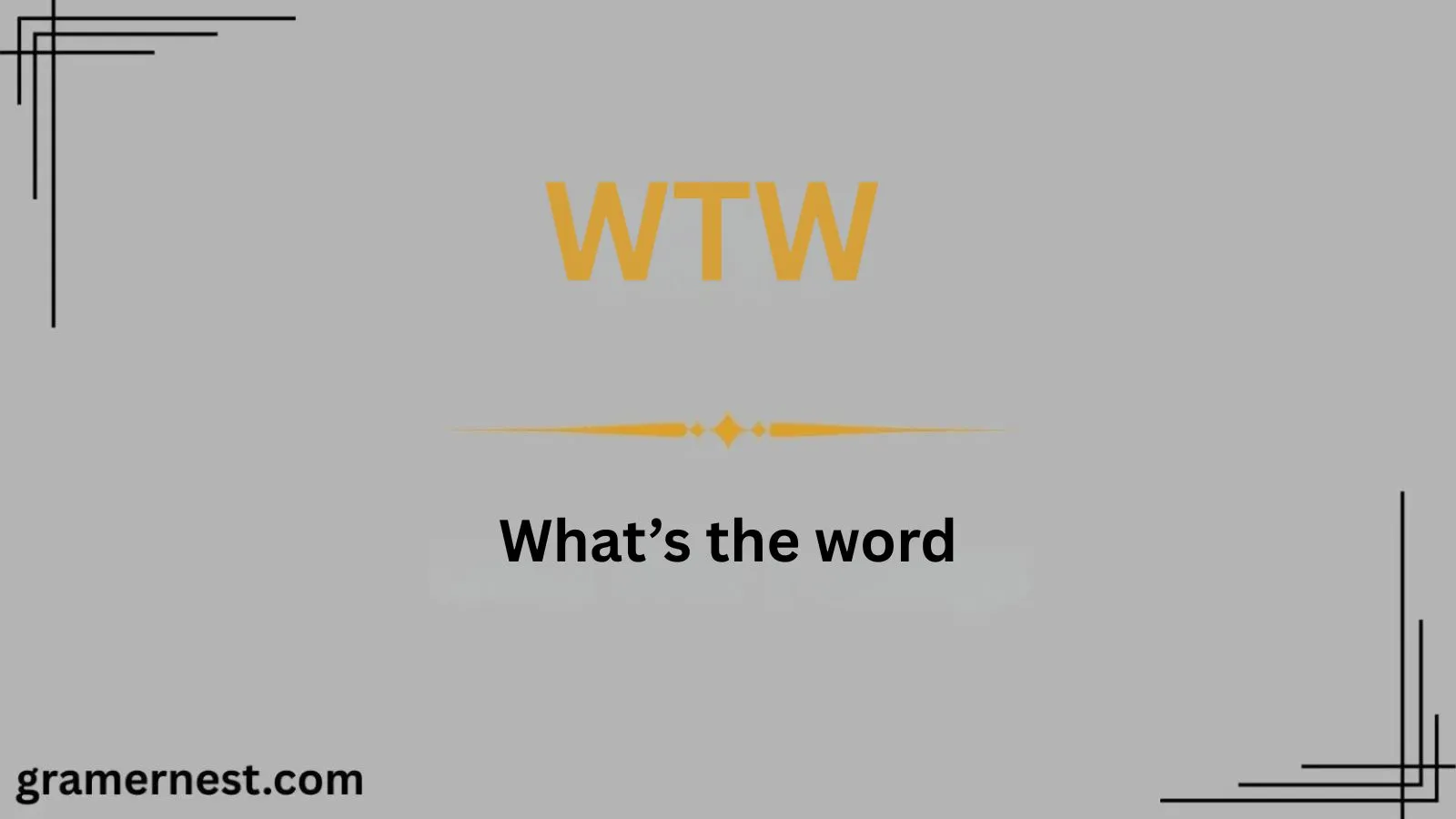
People search for “WTW meaning in text” because the phrase can have multiple meanings depending on where and how it’s used. In most casual conversations, WTW usually stands for “What’s the word?” or “What’s the wave?”—both ways of asking what’s happening, what the plan is, or what someone is doing.
However, in professional or technical fields, WTW may also represent entirely different terms. Understanding the right meaning depends on context, platform, and tone. This guide breaks down WTW in simple language, covering its origins, social media use, alternative meanings, and how to reply confidently so you never feel confused when it pops up in your messages again.
Let’s dive in!
Meaning & Definition of WTW
WTW is a popular internet acronym mainly used in casual texting and online communication. In most cases, it means “What’s the word?” This phrase is essentially another way of asking, “What’s going on?” or “What’s the plan?” It’s often used when someone wants updates, wants to hang out, or is checking in.
For example:
- “WTW tonight?” = What are we doing tonight?
- “Hey, WTW?” = What’s up?
- “WTW this weekend?” = Any plans this weekend?
Another common meaning is “What’s the wave?” This version is especially popular among younger users and can mean the same thing—asking what’s happening or what the move is.
In some contexts, WTW can also simply mean:
- What’s up?
- What’s happening?
- What do you want?
- What’s the move?
The phrase is intentionally casual and conversational. It saves time while sounding modern and friendly.
Tone matters a lot. If someone texts “WTW” without punctuation, it may feel chill or spontaneous. If they say “WTW later?” they’re likely asking to make plans.
The abbreviation is widely used because it’s short, flexible, and easy to type. Like many texting shortcuts, it reflects the speed of online communication, where users often prefer quick phrases over full sentences.
Background of WTW
WTW developed from urban slang and texting culture, where abbreviations became popular to simplify communication. “What’s the word?” existed long before smartphones and was commonly spoken in everyday conversation, particularly in American slang. It was a way of asking for news, plans, or updates.
As texting, instant messaging, and social platforms grew, people shortened longer phrases into acronyms. Just like “WYD” means “What are you doing?” and “BRB” means “Be right back,” WTW naturally became part of digital shorthand.
The phrase gained popularity through:
Text Messaging
People wanted quicker ways to ask about plans without typing full questions.
Social Media
Platforms like Snapchat, Instagram, and TikTok encouraged short-form communication.
Hip-Hop & Pop Culture
Music and youth culture often influenced phrases like “What’s the wave?” making WTW more trendy.
Over time, WTW expanded beyond one strict meaning. It became adaptable based on audience and platform. For example, among friends it may suggest hanging out, while on dating apps it can feel flirtier.
Its rise reflects how language evolves online. Slang terms often begin in spoken culture, move into texting, and eventually become mainstream internet language.
Usage in Different Contexts
WTW can mean slightly different things depending on where it’s used.
In Casual Chat
This is the most common setting. Friends use WTW to ask what someone is doing or if there are plans.
Example:
“WTW after school?”
On Social Media
On Snapchat, Instagram DMs, or TikTok comments, WTW often means:
- What’s up?
- What’s happening?
- Let’s talk
In Group Chats
It can be used to organize plans.
Example:
“WTW for Friday night?”
In Professional Settings
WTW is less common in formal business communication because it can appear too casual. However, in specific industries it may mean something technical.
In Dating Apps
WTW can be a conversation starter, often asking:
- What are you doing?
- Want to meet?
- What’s your vibe?
Because context changes meaning, reading the full conversation helps avoid misunderstandings.
WTW Meaning in Chat, WhatsApp, Instagram, and TikTok
Usually means “What’s up?” or “What’s the plan?”
Often used in DMs to start casual conversation.
Example:
“WTW this weekend 👀”
TikTok
May appear in captions or comments as slang for social plans or trending behavior.
Snapchat
Often means “What’s the move?” especially when discussing events.
Across all these platforms, WTW is informal, social, and usually friendly. Emojis can also change tone:
- “WTW 😂” = playful
- “WTW tonight?” = planning
- “WTW 👀” = curious or flirty
Meaning in Physics, Medical, and Aircraft Terminology
Although texting slang dominates, WTW can also have technical meanings.
Physics
WTW is not a major universal physics acronym, but in niche cases it may refer to technical shorthand depending on documentation.
Medical
WTW can occasionally mean specific internal abbreviations in healthcare systems, though it’s not widely standardized.
Aircraft
In aviation or engineering, WTW may represent technical measurements or company-specific shorthand.
The key point: outside casual messaging, WTW’s meaning depends heavily on industry-specific language. If you see it in a professional document, don’t assume it means “What’s the word?”
Common Misconceptions
Many people confuse WTW with other acronyms.
Misconception 1: It always means one thing
False. It can mean “What’s the word?” or “What’s the wave?”
Misconception 2: It’s rude
Not usually. Tone depends on context.
Misconception 3: It’s professional
Generally, it’s slang and best for informal settings.
Misconception 4: It means the same as WYD
Not exactly. WYD asks what someone is doing now, while WTW can ask about plans, news, or general updates.
Similar Terms & Alternatives
Here are common alternatives:
- WYD = What are you doing?
- WSP = What’s up?
- SUP = What’s up?
- HBU = How about you?
- LMK = Let me know
Each has slightly different social nuance, but all are conversational shortcuts.
How to Respond to WTW
Your response depends on the question’s tone.
Casual Replies:
- “Not much, you?”
- “Just chilling.”
- “Nothing yet, what’s up?”
Planning Replies:
- “Trying to go out later.”
- “No plans yet.”
- “Let’s do something.”
Flirty Replies:
- “Depends, what are you thinking? 😉”
Matching tone helps keep the conversation natural.
Differences From Similar Words
WTW vs WYD
WTW = broader, asks about plans or vibe
WYD = asks current activity
WTW vs WSP
WTW = often plan-focused
WSP = more general greeting
WTW vs HMU
WTW = asks first
HMU = invites contact
Understanding these differences improves texting confidence.
Relevance in Online Conversations & Dating Apps
WTW is especially useful in fast-moving digital spaces. On dating apps, it can feel more casual than “How are you?” and more engaging than “Hey.”
Examples:
- “WTW tonight?”
- “WTW this weekend?”
- “WTW with you?”
It creates easy conversation while sounding modern. Because dating apps favor short, quick communication, WTW often helps break the ice without sounding overly formal.
Conclusion
WTW is a versatile slang acronym that mainly means “What’s the word?” or “What’s the wave?” in texting and social media. It’s commonly used to ask what’s happening, what the plan is, or how someone is doing. While it’s mostly casual, its meaning can shift depending on platform, industry, or tone. Understanding context is the best way to interpret it correctly. Whether you see it on WhatsApp, Instagram, TikTok, or dating apps, WTW is usually a simple, friendly way to start a conversation. Knowing how to use and respond to it makes modern communication easier and helps you stay connected in today’s fast-paced digital world.