Hey, I want to share something that happened to me recently about WSP. I was chatting with a friend when I suddenly saw this term pop up, and honestly, I had no clue what it meant at first. I kept wondering, “Am I missing something here?” It was a bit confusing, and I didn’t want to respond the wrong way.
So, I decided to look into WSP meaning in text “What’s up?” and figure out its meaning and context. After understanding it, I realized how important it is to know these terms to avoid awkward situations in conversations.
I handled it by learning the proper meaning and responding confidently, and now I feel ready whenever I see WSP again in chats or social media.
Let’s dive in!
Meaning & Definition
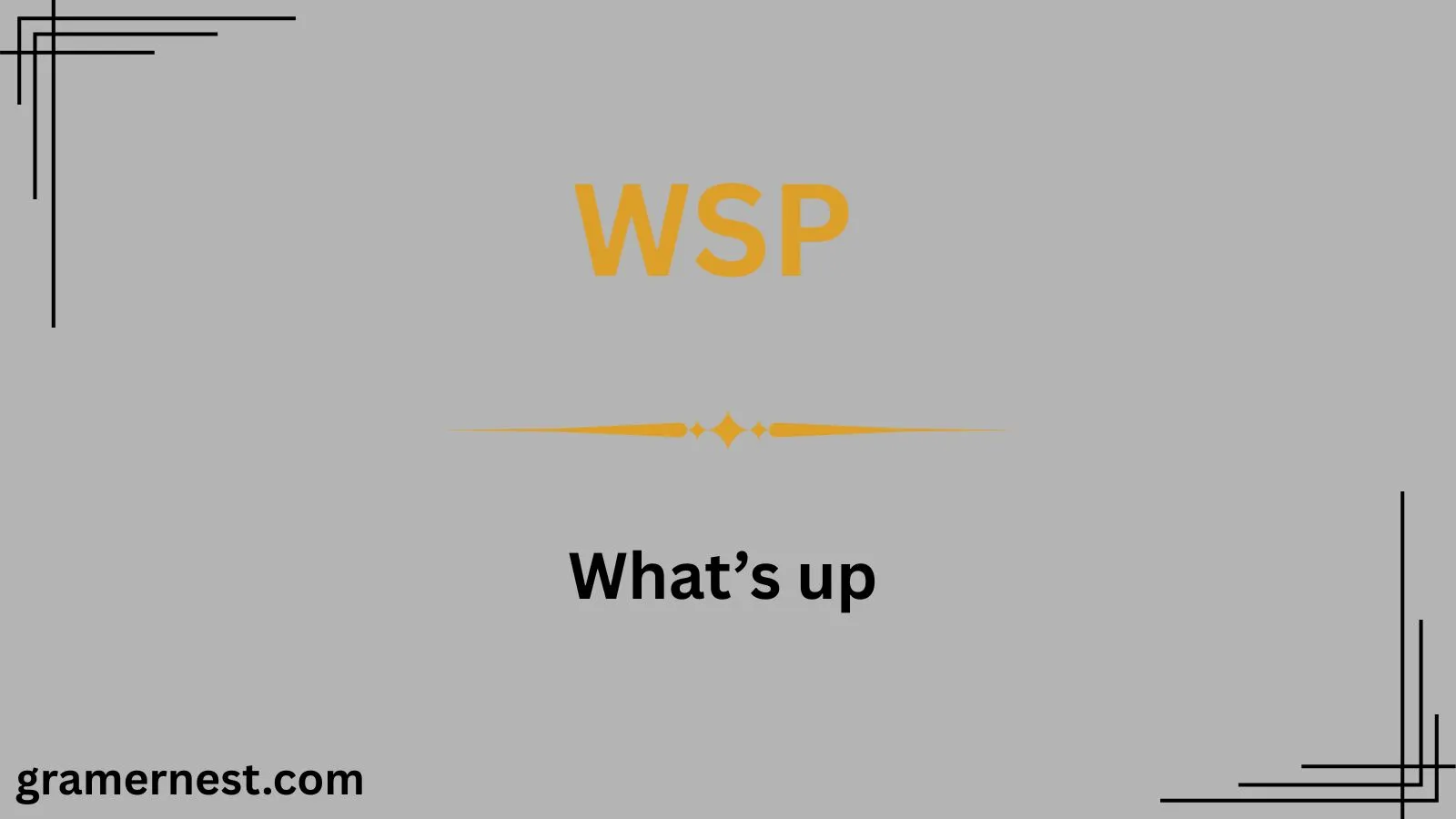
WSP is an acronym commonly used in digital communication. Its most popular meaning is “What’s up?”, a casual greeting used to ask someone how they are or what they are doing. Essentially, it’s a shorthand way of checking in with someone without writing a full sentence.
- Origin: WSP originated from early texting culture, where brevity was key due to character limits and typing inconvenience.
- Tone: The phrase is informal, friendly, and usually indicates casual conversation rather than professional communication.
- Usage: People use it when starting a chat, responding to friends, or casually greeting someone online.
Although “What’s up?” is the most common meaning, WSP can have other definitions in specialized fields, which we’ll discuss later.
Background
Abbreviations like WSP became widespread with the rise of mobile texting, instant messaging, and social media. In the 2000s, SMS messaging had strict character limits, prompting users to create shortcuts for common phrases. This trend continued as platforms like WhatsApp, Instagram, and TikTok grew in popularity, making shorthand a standard part of online culture.
WSP is part of a larger ecosystem of internet slang, including acronyms such as LOL (laugh out loud), BRB (be right back), and DM (direct message). Its casual nature has made it a staple greeting among teenagers, young adults, and even professionals in informal digital communication. Knowing such abbreviations has become essential to understanding online interactions fully.
Usage in Different Contexts
Chat & Social Media:
- WSP is most commonly used in one-on-one chats or group messages. For example:
- Friend 1: WSP?
- Friend 2: Not much, you?
- Friend 1: WSP?
- On social media, it often appears in comments or replies as a friendly, casual greeting.
Professional Fields:
- Rarely, WSP could appear as an abbreviation for specific terms in corporate communication. For example, it might be used informally among colleagues but is less common in official emails.
Messaging Apps:
- WhatsApp, Instagram, and TikTok are platforms where WSP thrives. Users often prefer shorthand greetings instead of typing “Hey, how are you?” every time.
Meaning in Chat, WhatsApp, Instagram, TikTok
In messaging apps like WhatsApp, WSP is almost always used as “What’s up?” It allows quick interaction without requiring a detailed response.
- WhatsApp: Typically in personal chats, often paired with emojis.
- Instagram: Used in DMs or casual comment threads.
- TikTok: Less frequent but may appear in video comments as a greeting or casual acknowledgment.
Across these platforms, WSP maintains an informal, approachable tone and is mostly friendly, not professional.
Meaning in Physics, Medical, and Aircraft Terminology
While in everyday texting WSP usually means “What’s up?”, it can have different interpretations in technical fields:
- Physics: WSP could refer to specific particle simulations or wave propagation studies, depending on context.
- Medical: Occasionally used as an abbreviation for certain procedures or protocols, though it’s rare.
- Aircraft: WSP might appear in technical documents as shorthand for maintenance procedures or system identifiers.
It’s essential to interpret WSP based on the context: casual chat versus technical or professional communication.
Common Misconceptions
Many people confuse WSP with similar abbreviations like:
- WSPN: Often misread as WSP but has different meanings.
- WSPC: Can be confused as a greeting but is technical.
- WP: Mistaken as WSP; it usually means “well played” or “waypoint.”
Understanding context is critical. If someone sends WSP in a chat, it almost certainly means “What’s up?”, but technical documents may require careful reading to avoid misinterpretation.
Similar Terms & Alternatives
- Hey – Simple greeting.
- Yo – Casual, informal greeting.
- Sup – Another variant of “What’s up?”
- Hi / Hello – Standard greetings.
Alternatives depend on tone, platform, and relationship with the recipient. WSP remains unique for its brevity and casual style.
How to Respond to WSP
Responding to WSP can be flexible depending on your mood or the conversation’s tone:
- Simple Reply: “Not much, you?”
- Friendly Reply: “Hey! Just chilling, how about you?”
- Humorous Reply: “Saving the world, as usual 😎. You?”
The key is to keep the tone light and match the informal nature of the greeting.
Differences from Similar Words
- WSP vs. Sup: “Sup” is a direct contraction of “What’s up?” while WSP is a texting acronym. Both convey the same meaning, but WSP is often used in written digital communication.
- WSP vs. Hello: Hello is neutral and formal, whereas WSP is casual and implies familiarity.
Relevance in Online Conversations & Dating Apps
In dating apps and online chats, WSP is extremely common because it starts a conversation without pressure. It’s casual and friendly, making it easier to connect with someone new. Using WSP in such contexts shows familiarity with digital slang and can help break the ice naturally.
FAQs:
1. What does WSP mean in text messages?
WSP usually means “What’s up?” It’s a casual way to ask someone how they’re doing or what they’re doing.
2. How is WSP used in chatting?
People use WSP at the start of a conversation, like “WSP bro?” or “WSP, how’s your day going?” It helps break the ice quickly.
3. Is WSP formal or informal?
WSP is informal slang. It’s best used with friends, family, or people you’re comfortable with, not in professional messages.
4. Can WSP have other meanings?
In most cases, WSP means “What’s up?” But in rare situations, it might stand for something else depending on context, though that’s uncommon.
5. How should I reply to WSP?
You can reply casually, like “Nothing much,” “Just chilling,” or share what you’re doing, such as “Working right now, you?”
Conclusion
Understanding what WSP means in text is essential for navigating modern communication. While it primarily serves as a casual greeting meaning “What’s up?”, it can also have technical interpretations in specialized fields. Recognizing its tone, context, and appropriate response ensures you stay relevant in chats, social media interactions, and even professional discussions. With WSP and other texting acronyms becoming a core part of digital language, knowing their meanings can improve both casual and online communication skills. Next time you see WSP in a message, you’ll know exactly how to reply!