In today’s digital age, abbreviations and acronyms have become an essential part of online communication. One of the most commonly used yet sometimes misunderstood acronyms is STFU.
Seen frequently in texting, chat apps, social media platforms, and even gaming forums, STFU can be confusing for those unfamiliar with internet slang. People often search for “what does STFU mean in text” to clarify its meaning, origin, and appropriate usage.
Understanding STFU is crucial for anyone wanting to navigate online conversations confidently, avoid misinterpretations, and communicate effectively in casual digital spaces.
This article provides a comprehensive guide to STFU, covering its definition, context, variations, and proper ways to respond. By the end, readers will not only understand what STFU stands for but also how to use it—or react to it—appropriately in daily online interactions.
Let’s dive in!
Meaning & Definition
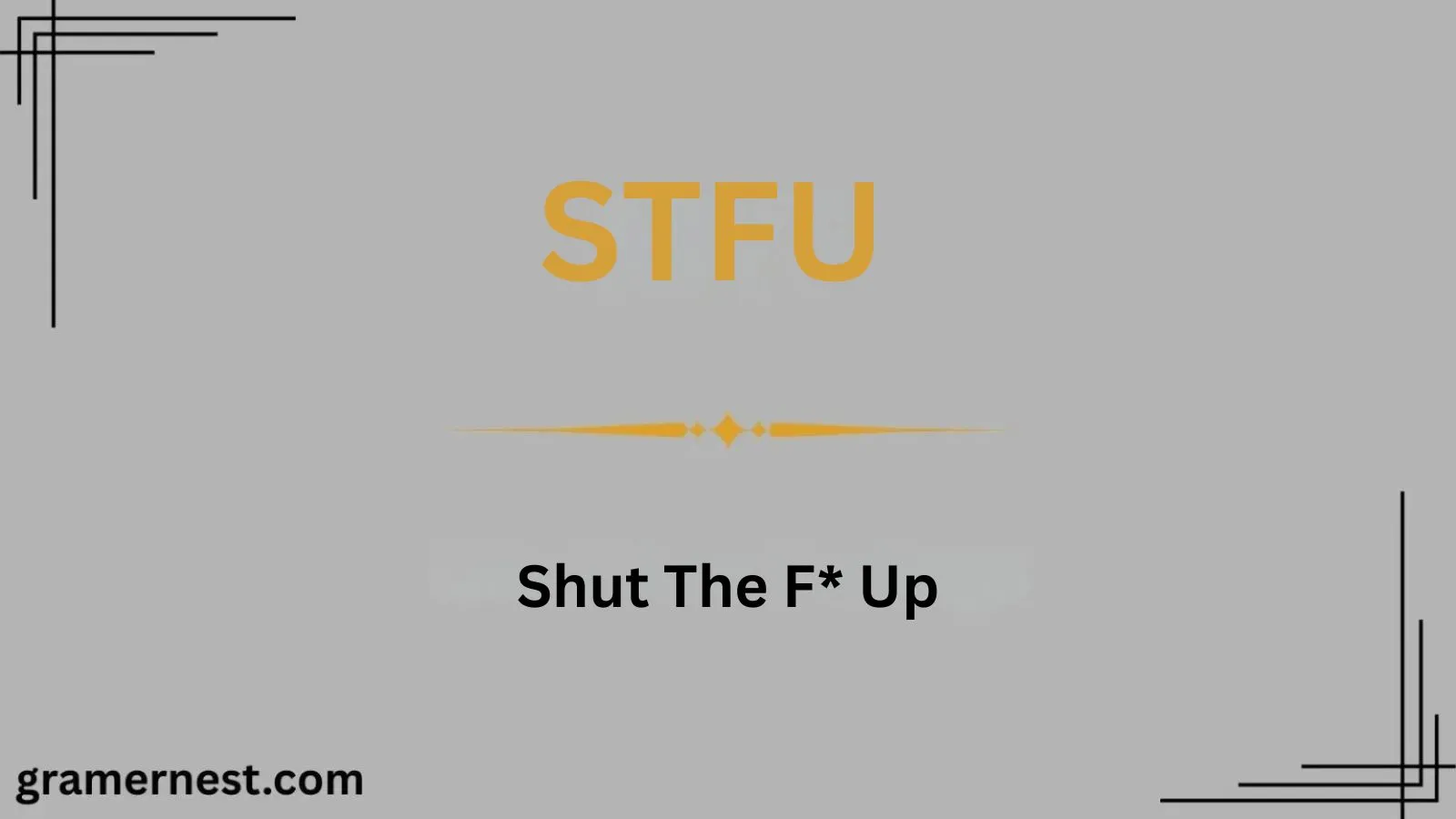
STFU is an acronym that stands for “Shut The F* Up.”** It is primarily used as a blunt, often rude way to tell someone to stop talking or to express frustration over what they are saying. While it is widely recognized in internet culture, it is considered informal, and in many cases, impolite.
The tone of STFU can range from humorous to hostile depending on context. For example, friends joking online may use it in a teasing manner, whereas strangers or heated discussions might make it sound aggressive. As a shorthand, STFU is part of the broader family of internet acronyms designed to convey strong emotions quickly and efficiently in text form.
Background
The use of STFU gained popularity in the early 2000s with the rise of instant messaging, online forums, and social media platforms. Acronyms like LOL, BRB, and OMG had already become standard, and STFU emerged as a way to express irritation or demand silence in a concise format.
STFU also became prevalent in online gaming communities, where rapid-fire communication requires short and clear expressions. Its proliferation was fueled by memes, chat rooms, and viral videos where exaggerated reactions often included the acronym. Understanding the background of STFU helps users recognize its tone, context, and potential social impact before using it themselves.
Usage in Different Contexts
STFU is versatile and appears in multiple digital contexts, including casual chat, social media, and even professional messaging if used jokingly.
Chat and Messaging
In chat apps like WhatsApp, Messenger, or Discord, STFU is often used among friends to humorously express annoyance:
- “STFU! That’s hilarious!”
- “STFU, you’re exaggerating!”
Social Media
Platforms like Instagram, TikTok, and Twitter see STFU in captions, comments, or memes. Its tone can be sarcastic, playful, or confrontational depending on the context.
Professional Fields
While generally inappropriate in formal settings, STFU occasionally appears in professional online discussions as humorous shorthand among close colleagues or in gaming/developer communities.
Meaning in Chat, WhatsApp, Instagram, TikTok
In messaging and social media, STFU conveys urgency or frustration:
- WhatsApp: Often seen in rapid-fire conversations with friends.
- Instagram/TikTok: Frequently used in comment sections for comedic emphasis or meme culture.
It’s worth noting that tone is key. STFU in these contexts may not always mean literal anger; sometimes it’s playful or exaggerated. Misreading it can lead to unintended offense.
Meaning in Physics, Medical, and Aircraft Terminology
Outside online slang, STFU can occasionally appear as an acronym in technical fields, but with entirely different meanings:
- Physics: Not commonly used.
- Medical: Could be part of internal shorthand, though rare.
- Aircraft/Engineering: Might appear as a technical code or file abbreviation unrelated to text slang.
Always rely on context—if you see STFU in a professional or technical setting, it is unlikely to mean “Shut The F*** Up.”
Common Misconceptions
Many people assume STFU is only offensive, but it can be friendly, humorous, or sarcastic among peers. Another misconception is confusing it with similar acronyms like STFUQ, which has no standard meaning. Misunderstanding tone, relationship between participants, and context often leads to misinterpretation.
Similar Terms & Alternatives
Alternatives or similar expressions include:
- STF (Shut The F*):** A slightly shorter form.
- Zip it: Polite version.
- Quiet down: Formal alternative.
- Mute: Neutral, digital-friendly alternative.
These alternatives vary in tone, from humorous to professional, depending on the context.
How to Respond to It
When someone uses STFU:
- Humorously: Respond with a joke if it’s clearly playful.
- Politely: Clarify tone or apologize if you may have annoyed them.
- Ignore: Best if it seems hostile and you want to avoid escalation.
Understanding context is key to responding appropriately.
Differences from Similar Words
STFU differs from abbreviations like “Shush” or “Be quiet” because it carries a stronger, more emotional tone. While “shush” is gentle and universal, STFU is informal and often carries humor, sarcasm, or anger.
Relevance in Online Conversations & Dating Apps
STFU has significant relevance in online chats and dating apps. In casual digital communication, using or understanding STFU signals familiarity with internet culture. It also allows users to express emotion quickly.
However, in dating or professional contexts, misuse can be perceived as rude or disrespectful. Understanding when and how to interpret it ensures smoother interactions and prevents misunderstandings.
FAQs:
1. What does STFU mean in text?
STFU stands for “Shut The F* Up.” It’s a slang abbreviation used in texting or online chats to tell someone to be quiet, often in a strong or rude way.
2. Is STFU always rude?
Yes, in most cases it’s considered rude or offensive. However, close friends may sometimes use it jokingly, depending on their relationship and tone.
3. When do people use STFU in messages?
People use STFU when they’re annoyed, frustrated, or want someone to stop talking. It can appear in arguments, gaming chats, or casual conversations.
4. Can STFU be used in a funny way?
Sometimes, yes. Among friends, it can be used humorously or sarcastically, but it still carries a harsh tone, so context matters a lot.
5. Should I use STFU in conversations?
It’s generally better to avoid using STFU, especially in professional or formal settings, as it can offend others. Using polite language is usually a safer choice.
Conclusion
STFU is more than just a blunt acronym; it’s a reflection of modern internet communication, balancing humor, urgency, and sometimes hostility. Its popularity in chat apps, social media, and online communities underscores the importance of understanding tone and context.
While it can be playful among friends, misusing it in professional or sensitive environments can cause offense. Recognizing STFU’s meaning, proper usage, and alternatives allows users to communicate effectively, navigate digital conversations confidently, and respond appropriately to online slang. As digital communication evolves, knowing acronyms like STFU ensures that you stay current and culturally fluent in online interactions.
Read More Posts
- BBG Mean in Text: What It Actually Means, Just for You (2026)
- IMO Mean in Text: The Real Meaning Explained Just for You (2026)
- FN Mean in Text: The Real Meaning Explained Just for You (2026)